

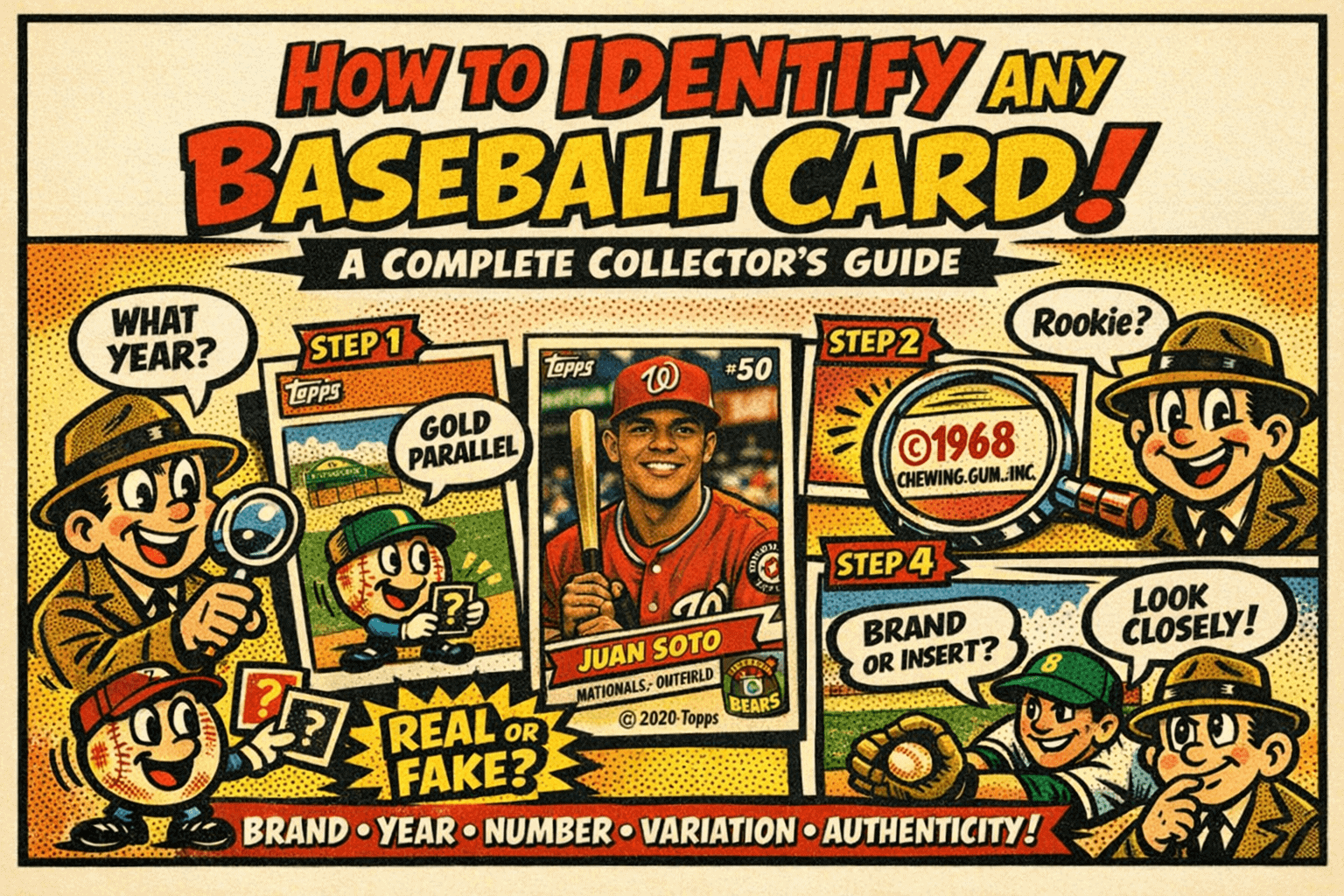
Identifying a baseball card is the foundation of the entire hobby. Whether you’re sorting a childhood shoebox, digging through a dollar box at a show, or evaluating a card for grading, knowing the year, brand, series, variation, and authenticity determines everything else—value, rarity, and whether the card is even real. This guide breaks down a simple, repeatable process that works for vintage, junk wax, modern, and ultra‑modern cards.
Understanding the Five Core Elements of Card Identification
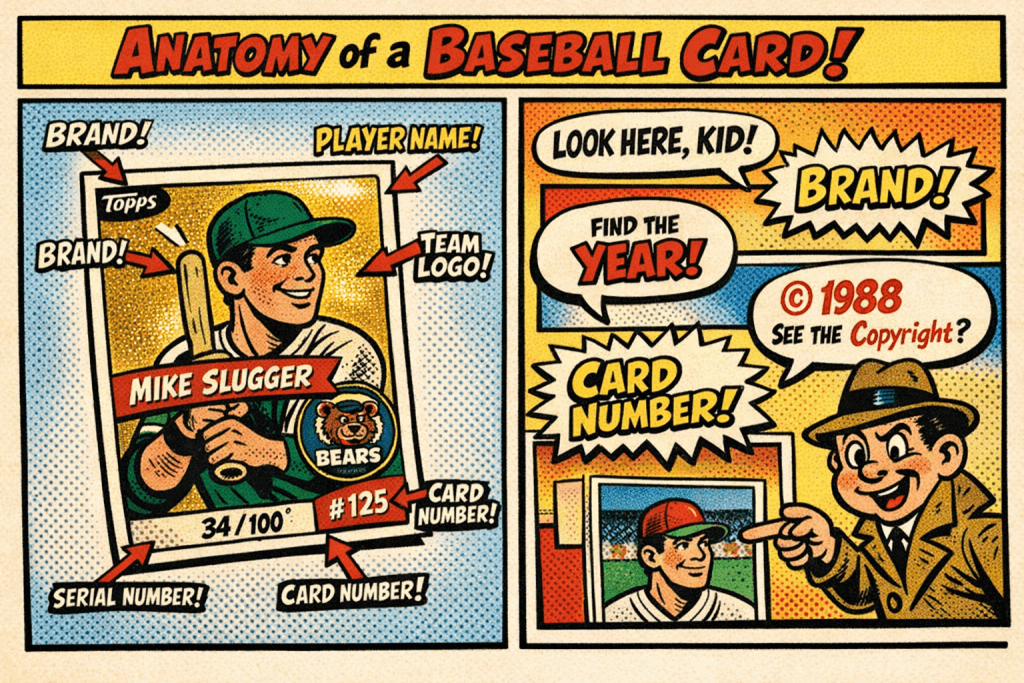
Every baseball card can be identified by five key details:
- Brand (Topps, Bowman, Panini, Upper Deck, Fleer, etc.)
- Year (printed or deduced)
- Series / Product Line (Series 1, Heritage, Chrome, Sapphire, etc.)
- Card Number (the catalog identifier)
- Variation / Parallel / Insert Type (if applicable)
Once you know these, you can look up comps, check rarity, and determine value with confidence.
1. Finding the Brand and Manufacturer
The brand is usually printed clearly on the front or back of the card.
Common brands you’ll see
- Topps – the main MLB‑licensed brand
- Bowman – owned by Topps; known for prospects and rookies
- Panini / Donruss – unlicensed MLB cards (no team logos)
- Upper Deck – vintage and early 2000s
- Fleer / Score / Leaf – junk wax era staples
Quick tells
- No team logos = Panini
- Chrome finish = Topps Chrome or Bowman Chrome
- Vintage‑style designs = Topps Heritage
- Cartoon backs = vintage Topps or Heritage throwbacks
If the card has no brand at all, it may be a reprint, food issue, regional issue, or counterfeit.
2. Determining the Year of the Card
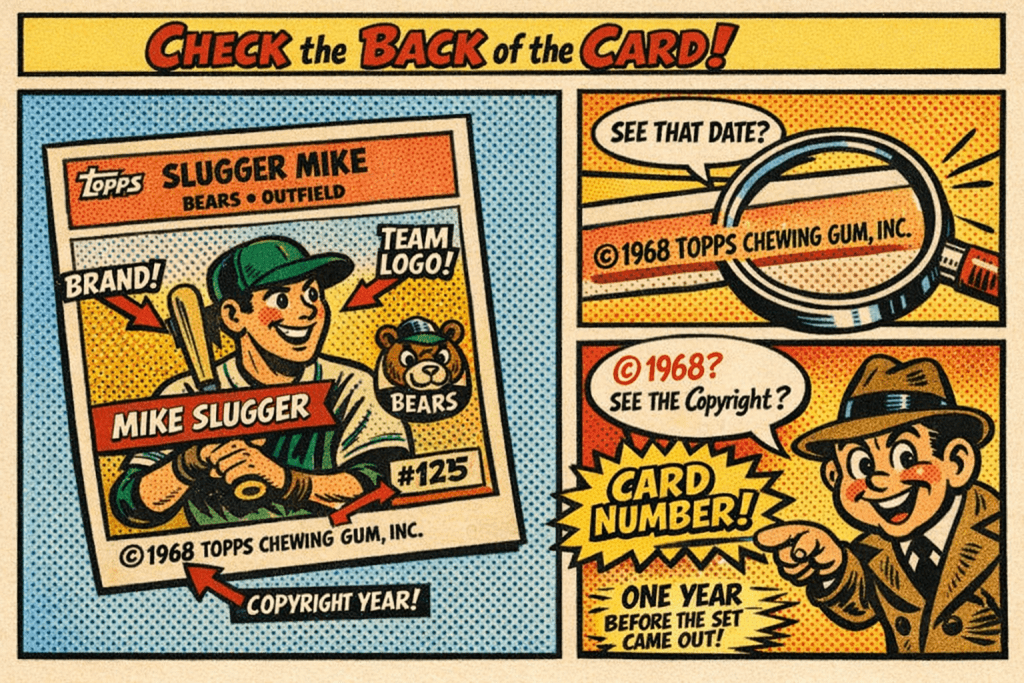
The year is almost always printed on the back, but it’s not always the year the card represents.
Where to find the year
Look for:
- A copyright year
- The final year in the stat line
- A small line like “© 1989 Topps Company, Inc.”
Important nuance
The copyright year is often one year before the release year.
Examples:
- Copyright 1988 → 1989 Topps
- Copyright 2023 → 2024 Topps Series 1
For vintage cards
If the year isn’t obvious, use:
- Uniform style
- Team name changes
- Stat lines
- Design era clues
3. Finding the Card Number
The card number is the key to identifying the exact card in a set.
Where to find it
- Back of the card (top-left, top-right, or bottom center)
- Inside design elements (Heritage, Ginter)
Types of card numbers
- Base numbers (e.g., #245)
- Insert numbers (e.g., RC‑12, SS‑3)
- Parallel numbering (e.g., #245 /199)
- Short print codes (tiny numbers on modern Topps backs)
If the card has no number, it may be a promo, a checklist, a misprint, or counterfeit.
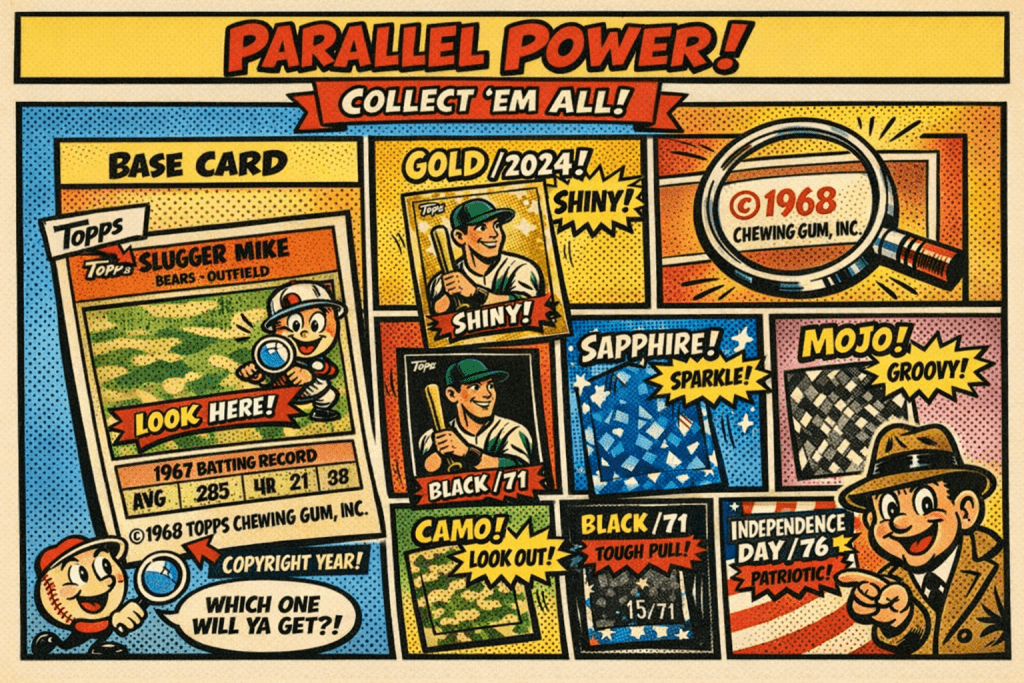
4. Identifying Parallels, Variations, and Inserts
Modern cards have dozens of variations, and identifying them correctly is crucial for value.
Parallels
Alternate versions of the base card with different colors or finishes.
Common parallels:
- Rainbow foil
- Gold /2024
- Blue, Green, Orange, Red
- Sapphire
- Refractors
- Mojo
- Atomic
- Camo
- Black /71
- Independence Day /76
How to identify a parallel
- Look for serial numbering
- Compare color to the base version
- Check for refractor shine
- Look for “Refractor” printed on the back (Topps Chrome)
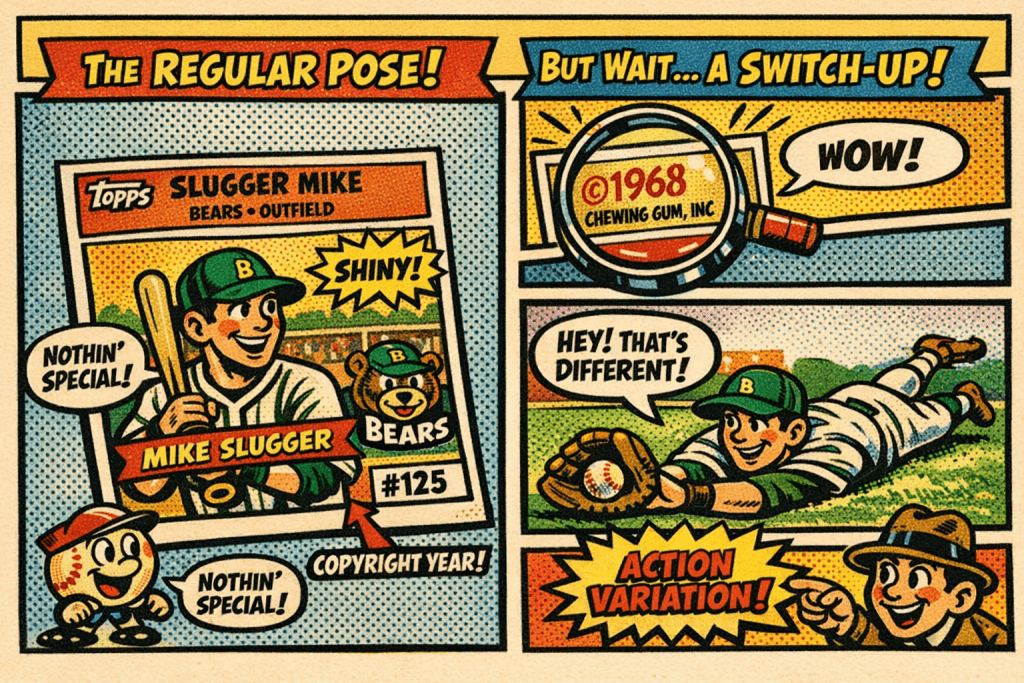
Variations
Variations change the image or design but keep the same card number.
Examples:
- Photo variations
- Throwback uniforms
- Error corrections
- Heritage action variations
How to identify a variation
- Compare to the base image online
- Check the tiny code on the back
- Look for unusual poses or backgrounds
Inserts
Cards from special subsets within the product.
Examples:
- 1988 Topps throwbacks
- Stars of MLB
- Home Field Advantage
- Bowman Scouts Top 100
Inserts usually have:
- Unique numbering (e.g., HA‑12)
- Different card stock
- A distinct design theme
5. Licensed vs Unlicensed Cards
This affects value and identification.
Licensed (Topps/Bowman)
- MLB logos
- Team names
- Official branding
Unlicensed (Panini)
- No MLB logos
- Airbrushed hats and jerseys
- Team names removed
Unlicensed cards can still be collectible but generally sell for less.
6. Identifying Reprints, Counterfeits, and Fakes
This is critical for vintage and high‑value cards.
Signs of a reprint
- “Reprint” printed on the back
- Modern card stock
- Too glossy
- Wrong size
- Wrong back color
Signs of a counterfeit
- Blurry text
- Incorrect fonts
- Wrong card stock thickness
- Off‑center borders inconsistent with the era
- Missing print dots (vintage cards used dot patterns)
High‑risk cards
- 1952 Topps Mantle
- 1986 Fleer Jordan
- 1993 SP Jeter
- 2009 Mike Trout Bowman Chrome
- Any vintage rookie of a major star
7. Using Context Clues for Tough Cards
Some cards require detective work.
Helpful clues
- Uniform style
- Stadium backgrounds
- Team name changes (Expos → Nationals)
- Player age or stats
- Design era
- Print technology differences
This is especially useful for oddball cards, minor league cards, food issues, and regional releases.
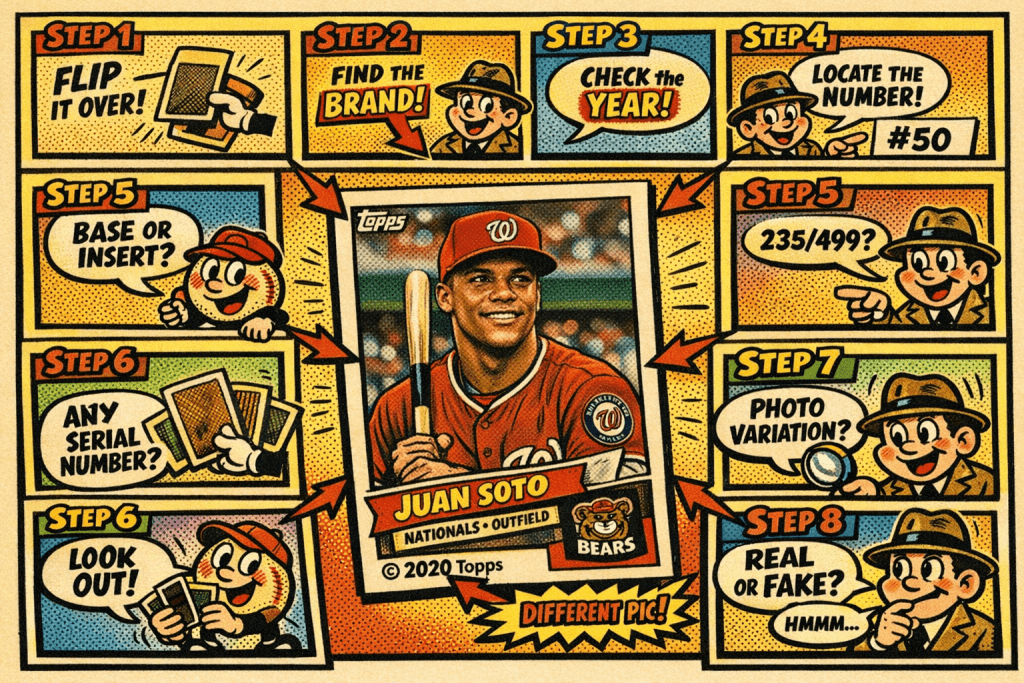
8. A Simple, Repeatable Identification Workflow
Use this quick process for any card:
- Flip the card over
- Find the brand
- Find the copyright year
- Confirm the release year
- Locate the card number
- Determine base vs insert vs parallel
- Check for serial numbering
- Compare to online images for variations
- Confirm licensed vs unlicensed
- Evaluate authenticity if vintage or high‑value
Once you’ve done this, you can confidently look up comps, check rarity, decide whether to grade, and add the card to your inventory spreadsheet.