

TL;DR
- Most collectors are losing money grading because fees are up, gem rates are down, and pop counts are out of control.
- PSA’s shutdown exposed how fragile the grading ecosystem really is — and how dependent the hobby became on one company.
- High‑pop modern slabs are collapsing in value while raw cards and scarce, low‑pop issues are holding strong.
- SGC becomes the immediate winner, Beckett gets a rare second chance, and TAG/CSG gain niche momentum.
- The future belongs to collectors who grade strategically, not emotionally — focusing on ROI, scarcity, and true demand.
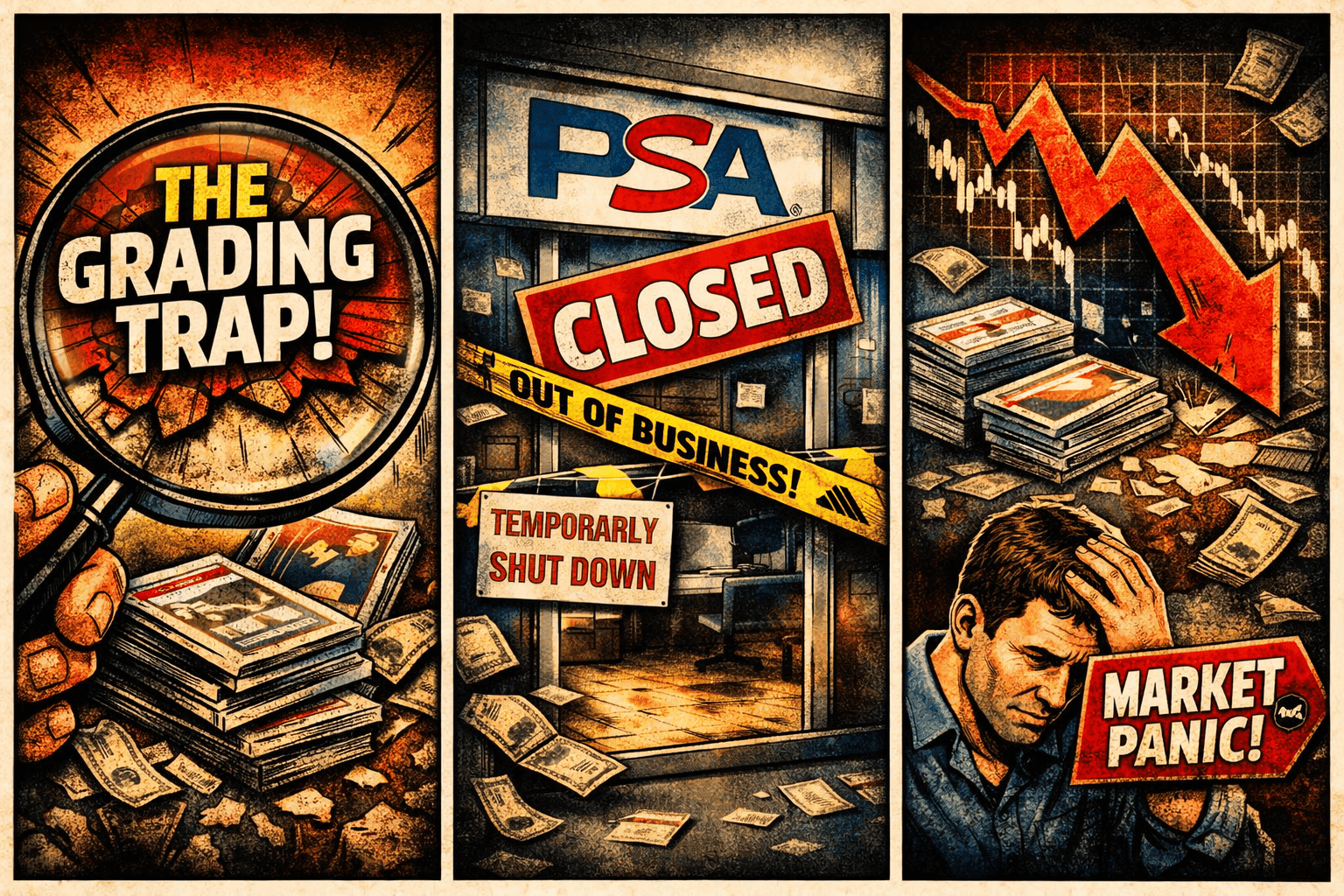
The grading boom created an illusion that sending cards to PSA, SGC, or Beckett was a guaranteed win. For a while, it felt true — you could grade almost anything, slap a 10 on it, and double your money overnight. But that era is gone, and most collectors haven’t adjusted. They’re still grading like it’s 2021, and the hobby is quietly eating their lunch.
The truth is simple: grading is a trap when you don’t understand the economics behind it. And most collectors don’t.
1. The Cost‑to‑Value Gap Has Exploded
Grading fees went up. Pop counts went up. Card values went down. That’s the worst possible combination for the average collector. A $19 bulk submission on a $5 card is a losing play before the slab even comes back. And yet people keep doing it because they’re chasing the “PSA 10 lottery.”
The problem? Most cards aren’t 10s. And even when they are, the market doesn’t care unless the card is rare, iconic, or tied to a superstar.
2. High Pop = Low Ceiling
The hobby still hasn’t accepted this: A PSA 10 of a massively printed card is not rare. It’s not special. It’s not an investment. It’s a commodity.
When a card has a pop of 8,000+ in PSA 10, you’re not holding a collectible — you’re holding a product that can be replaced instantly by thousands of identical copies. That’s why modern rookies, base Prizms, and mass‑produced inserts are getting crushed.
3. Grading Companies Don’t Care What You Submit
PSA isn’t your financial advisor. SGC isn’t your portfolio manager. Beckett isn’t your risk‑management team. They’ll grade anything you send them — and they’ll happily take your money even if the card is worth less after grading.
The trap is thinking the grading companies are the gatekeepers of value. They’re not. The market is.
4. The Only Cards Worth Grading in 2026
If you want to win in this market, the rules are brutally simple:
- Low‑pop parallels
- True rookies of proven stars
- Vintage with strong eye appeal
- Cards with real scarcity (not manufactured scarcity)
- Cards that already have raw value
If the raw card isn’t worth grading, the slab won’t magically fix it.
5. The Smart Collectors Are Grading Less — and Winning More
The people making money right now aren’t sending in 50‑card bulk orders. They’re sending in 3–5 cards they’ve carefully selected. They’re grading with intention, not hope. They’re playing the long game.
The grading trap only catches the collectors who think grading creates value. It doesn’t. It reveals value. And most cards don’t have it.
NEWS ALERT:
PSA Shutting Down: What It Means for the Hobby (The Good, the Bad, and the Ugly)
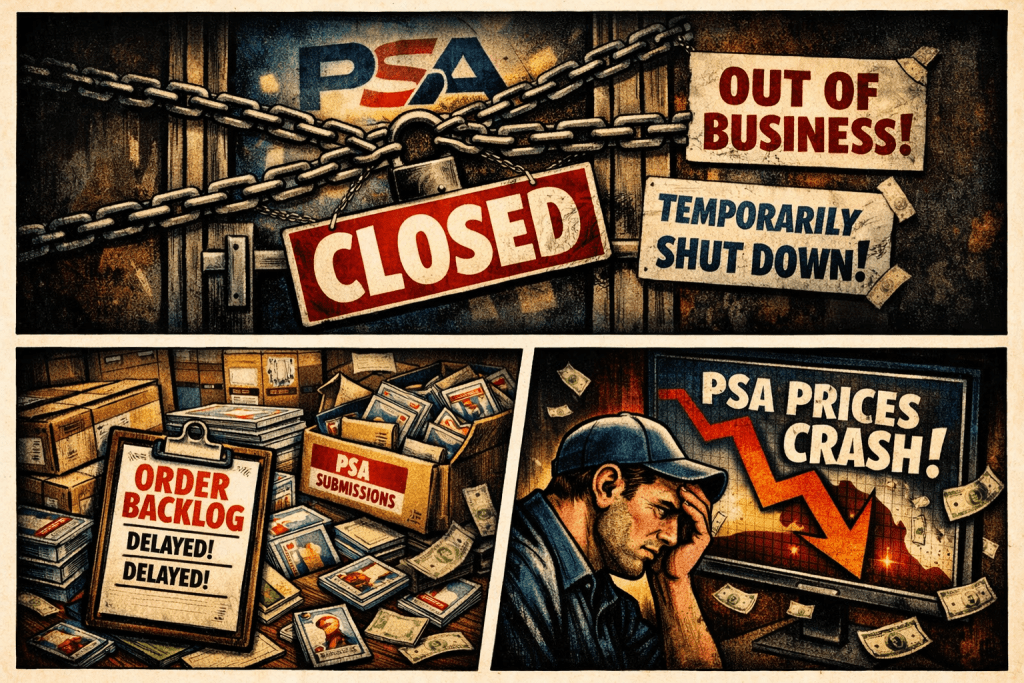
The biggest shock to hit the hobby recently is the news that PSA is shutting down operations. Whether it’s temporary, permanent, or a restructuring depends on who you ask — but the impact is immediate and massive. PSA has been the backbone of the grading ecosystem for years. When the biggest player goes dark, the entire hobby feels it.
The Negative Ramifications
Let’s start with the obvious:
1. Market instability PSA slabs are the hobby’s currency. When the main grading company shuts down, confidence takes a hit. Prices wobble. Buyers hesitate. Sellers panic. It creates a short‑term freeze where nobody knows what anything is worth.
2. Backlog chaos Collectors with open orders are stuck in limbo. Cards in transit, cards in grading, cards in QA — all frozen. That’s thousands of collectors with money tied up and no timeline.
3. Pop report disruption PSA’s pop report is the standard reference for scarcity. If updates stop, the entire market loses its most important data source. That affects pricing, comps, and long‑term valuation.
4. Investor confidence drops Like it or not, PSA is the brand investors trust. When that trust cracks, investor money pulls back. That hurts liquidity across the entire hobby.
The Positive Ramifications
Believe it or not, there are upsides — especially for collectors who think long‑term.
1. PSA slabs become more scarce If PSA truly shuts down or even pauses for months, existing PSA slabs instantly become more valuable. Scarcity drives demand. High‑end PSA 10s could see a bump simply because no new ones are entering the market.
2. Other grading companies get a real shot SGC, Beckett, TAG, CSG — they all get a window to grab market share. Competition is good for collectors. It forces innovation, better pricing, and better turnaround times.
3. Raw card market wakes up With grading bottlenecked, raw cards regain importance. Eye appeal matters again. Condition matters again. Collectors start buying with their eyes instead of chasing a label.
4. The hobby resets PSA’s dominance created a grading‑first mentality. Everything was about the slab. A shutdown forces the hobby to rethink value, scarcity, and what actually makes a card collectible.
The Bottom Line
PSA shutting down is a shockwave — but not the end of the hobby. It’s a reset. A painful one, but a necessary one.
Collectors who adapt will come out ahead. Collectors who keep grading like it’s 2021 will get buried.
The Future of Grading After PSA’s Shutdown
The PSA shutdown didn’t just shake the hobby — it forced everyone to rethink what grading even is. For years, PSA was the default. The safe choice. The brand that set the market. When the biggest player suddenly goes dark, the entire ecosystem has to evolve. And it will.
Here’s what the next 12–18 months of grading are likely to look like.
1. SGC Becomes the Immediate Winner
SGC has the fastest turnaround times, the most consistent grading team, and the cleanest operations. They’re the only company positioned to absorb a massive wave of displaced PSA customers without collapsing under the weight.
Expect:
- Higher SGC submission volume
- Increased resale value for SGC 10s
- More dealers shifting their inventory strategy toward black‑label slabs
SGC won’t replace PSA’s brand power overnight — but they’ll take the biggest bite out of the vacuum.
2. Beckett Has a Rare Second Chance
Beckett has been drifting for years, but PSA’s shutdown gives them a window to reclaim relevance.
If they:
- Fix their turnaround times
- Clean up their grading consistency
- Modernize their slabs
…they could re‑enter the conversation in a real way. But it’s a big “if.”
3. TAG and CSG Gain Niche Momentum
TAG and CSG won’t suddenly become the new PSA — but they will benefit from collectors looking for alternatives.
TAG wins with:
- Tech‑driven grading
- Transparency
- Data‑backed scoring
CSG wins with:
- Strong slabs
- Solid consistency
- Lower fees
Neither becomes the new king, but both gain market share.
4. PSA Slabs Become Scarce — and Scarcity Drives Value
If PSA stays closed for months, the existing PSA population becomes a fixed supply. That means:
- PSA 10s of key rookies become more desirable
- Low‑pop PSA slabs get a premium
- Even mid‑tier PSA cards stabilize because no new supply enters the market
Collectors love certainty. A frozen pop report creates it.
5. Raw Cards Make a Comeback
With grading bottlenecked, raw cards regain importance.
You’ll see:
- More raw‑to‑raw deals
- Higher premiums for clean copies
- Collectors trusting their own eyes again
This is healthy for the hobby. It resets the balance between the card and the label.
6. The Hobby Learns to Grade Smarter
The PSA shutdown forces collectors to stop grading everything and start grading intentionally.
The winners will be the people who:
- Grade only high‑ROI cards
- Understand pop counts
- Avoid mass‑produced modern
- Focus on scarcity, not hype
The hobby needed this correction. PSA’s shutdown just accelerated it.
📚 References
1. PSA Grading Standards & Population Report Provides official PSA grading criteria, population data, and card census information — supports your points about high pop counts and grading outcomes. https://www.psacard.com/pop
2. Sports Collectors Daily — Industry News & Grading Market Coverage A trusted hobby news outlet that regularly reports on PSA operational changes, backlog issues, and grading trends. https://www.sportscollectorsdaily.com/category/grading/