
🎯 Why Value Tracking Matters
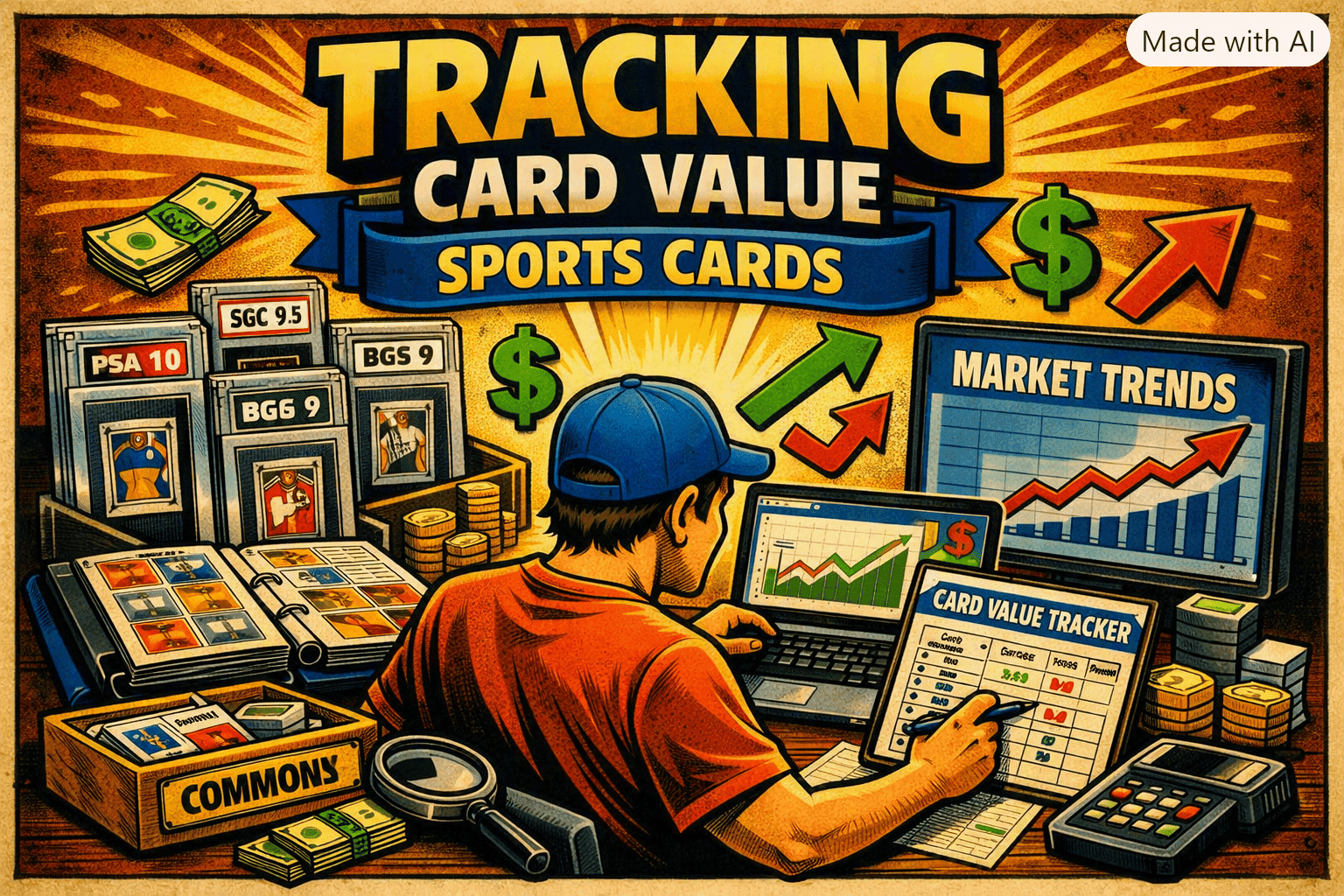
Knowing what your cards are worth isn’t just about bragging rights — it’s how you make smart buying, selling, and trading decisions. Whether you’re flipping, grading, or building a long‑term PC, tracking value keeps you ahead of market swings and hype cycles.
🧩 Step 1: Understand What Drives Value
Card value changes constantly based on:
- Player performance — hot streaks and milestones spike prices.
- Rarity — numbered, short‑print, and low‑population cards hold stronger value.
- Condition — raw vs. graded makes a huge difference.
- Market demand — trends shift fast; yesterday’s sleeper can be tomorrow’s grail.
- Timing — offseason dips and playoff surges are real.
👉 For grading impact, read: https://kenscoolcards.com/grading-basics-sports-cards
💻 Step 2: Use Reliable Tracking Tools
Skip guesswork — use data.
Best Tools for Real‑Time Value
- CollX – scan cards and get instant comps.
- Card Ladder – tracks graded sales and market trends.
- eBay Sold Listings – the most direct real‑world pricing.
- Market Movers – great for portfolio tracking.
- 130Point – detailed eBay sale verification.
👉 For pricing strategy, read: https://kenscoolcards.com/pricing-your-cards-using-sold-listings-and-market-trends
🧮 Step 3: Build Your Own Value Tracker
You don’t need fancy software — a spreadsheet works perfectly.
Columns to Include
| Field | Description |
|---|---|
| Player | Name of athlete |
| Card Details | Year, set, number |
| Condition | Raw or graded |
| Grade | PSA 10, SGC 9.5, etc. |
| Purchase Price | What you paid |
| Current Market Value | Latest comp |
| Profit/Loss | Difference |
| Notes | Trends, sale dates, or buyer info |
📦 Step 4: Separate PC vs. Investment Cards
Your personal collection (PC) and your investment cards serve different purposes.
- PC cards: sentimental, not for sale.
- Investment cards: tracked for ROI.
- Trade box: cards you’re willing to move for upgrades.
👉 For organization tips, read: https://kenscoolcards.com/organizing-sports-card-collection
📈 Step 5: Monitor Market Trends
Watch for:
- Player call‑ups, trades, or injuries.
- Set releases and reprints.
- Grading company changes (PSA price drops, SGC promos).
- Seasonal hype (Spring Training, playoffs, Hall of Fame voting).
Set alerts or reminders to check values monthly — markets move fast.
💰 Step 6: Know When to Sell
Timing is everything. Sell when:
- A player’s hype peaks.
- You’ve hit your target ROI.
- You need liquidity for new buys.
Hold when:
- The player’s long‑term outlook is strong.
- The market is cooling temporarily.
- You’re waiting for grading or authentication.
🧠 Key Takeaways
- Track values weekly using reliable tools.
- Separate PC and investment cards.
- Use spreadsheets for clarity.
- Watch market trends and player performance.
- Sell strategically — not emotionally.